
Haight Stang, LLC successfully helps the injured recover compensation they deserve.
Workers’ Comp Benefits in Kansas City
What You’re Entitled to & How Carriers Dispute It
Missouri workers’ comp and Kansas workers’ compensation law provide injured workers with medical treatment, wage replacement, and monetary compensation for permanent impairment. What the statute provides and what the carrier actually authorizes are often two different things. That gap is where most workers’ comp benefits disputes in the Kansas City metro are fought.
At Haight Stang, LLC, our practice is built entirely around workers’ compensation claims in Kansas and Missouri. Before founding this firm, both Michael Haight and Michael Stang spent years on the defense side, representing employers and insurance carriers directly. That experience makes a concrete difference in how we approach benefits disputes: we know how carriers structure IME requests, how they push for early MMI findings, and how they exploit the “reasonable and necessary” standard before those tactics are used against our clients. Injured workers often don’t know which benefits they’re entitled to or when a carrier’s delay or denial may be legally contestable. Carriers count on that information gap. We close it.
If you have questions about your workers’ comp benefits in Kansas City, call us at (913) 815-1347 to speak with our attorneys.
Medical Benefits: What the Carrier Owes You & How They Avoid Paying It
Under Missouri RSMo § 287.140, your employer’s insurance carrier is responsible for all medical treatment that is reasonable, necessary, and causally related to your work injury. No co-pays. No deductibles. No out-of-pocket costs for covered care. That’s the statute. The gap between what it requires and what the carrier actually authorizes is where most benefits disputes begin.
How Carriers Contest Medical Authorization
Carriers operating in the Kansas City market routinely contest the “reasonable and necessary” standard not because the treatment is medically questionable, but because limiting authorized care reduces claim costs. Delayed authorizations for MRIs, orthopedic referrals, and pain management are standard tactics. The Missouri Division of Workers’ Compensation’s dispute resolution process exists for exactly this reason, but most injured workers don’t know they can use it while they’re still treating.
Covered medical expenses include physician visits, surgical and hospital costs, prescription medications, and durable medical equipment such as braces, crutches, wheelchairs, and prosthetics. Disputes over durable medical equipment and long-term prescriptions are common because ongoing costs draw more scrutiny from adjusters than acute surgical care does. We represent clients whose treatment has been delayed or denied, from initial filing through contested hearings before Administrative Law Judges at the Missouri Division of Workers’ Compensation Kansas City District.
Kansas Medical Authorization Under K.S.A. 44-510
Kansas operates under K.S.A. 44-510, with one critical procedural difference: the authorized treating physician has more direct control over the course of treatment, and disputes over authorization go to the Kansas workers’ compensation system rather than a Missouri ALJ. If your employment crosses state lines, which state’s medical authorization process applies is a procedural question with real consequences for your claim.
Learn more about what benefits you deserve by speaking with our Kansas City attorney today!
Disability Benefits: The Four Categories & What They Actually Pay
Missouri workers’ comp recognizes four disability classifications. The distinction between them isn’t semantic. Each carries a different payment structure, a different duration, and a different legal standard for qualification.
Temporary Total Disability (TTD)
TTD applies when your treating physician certifies that you can’t return to any work. Missouri pays TTD at 66⅔% of your average weekly wage, subject to the state’s annual maximum. For injuries occurring July 1, 2025 through June 30, 2026, that ceiling is $1,280.84 per week. For injuries occurring July 1, 2024 through June 30, 2025, the rate was $1,228.04 per week. TTD continues until you reach maximum medical improvement (MMI) or return to work, whichever comes first. Carriers push for early MMI findings; when the treating physician’s determination and an IME finding diverge, that dispute may be resolved at a hearing before an ALJ.
Temporary Partial Disability (TPD)
TPD applies when you can work modified or light duty but at reduced wages. Missouri calculates TPD at 66⅔% of the difference between your pre-injury wage and your current earning capacity. If your employer offers light duty that pays less than your regular wage and you accept, TPD makes up a portion of that difference. If the offer isn’t genuinely within your actual medical restrictions, the analysis changes. The legitimacy of the offer, not just its paperwork compliance, controls eligibility.
Permanent Partial Disability (PPD)
PPD applies once you’ve reached MMI and have a measurable permanent impairment that doesn’t prevent all work. Missouri rates PPD using the AMA Guides to the Evaluation of Permanent Impairment, though the state doesn’t mandate a specific edition. The edition applied and the methodology the rating physician uses directly determine the benefit amount. For injuries occurring July 1, 2025 through June 30, 2026, the Missouri maximum PPD weekly rate is $670.92. PPD can be structured as a lump sum or periodic payments. The gap between a carrier’s IME rating and a treating physician’s rating most frequently produces significant dollar differences, and many contested PPD claims in Jackson County hearings turn on exactly that dispute.
Permanent Total Disability (PTD)
PTD applies when your injuries prevent you from performing any work in any capacity. Missouri’s standard under RSMo § 287.020 requires total disability, not merely that you can’t return to your prior occupation. PTD benefits are paid at 66⅔% of average weekly wage for life, or can be settled as a lump sum. For injuries July 1, 2025 through June 30, 2026, the maximum PTD weekly rate is $1,280.84. The Missouri Second Injury Fund may provide additional PTD benefits when a prior disability combines with a work injury to produce total disability. Carriers don’t volunteer information about the Second Injury Fund. We handle PTD claims and Second Injury Fund proceedings for clients across the Kansas City area.
Wage Loss Benefits: How the Average Weekly Wage Calculation Works
The 66⅔% figure appears across all disability categories, but the base it’s applied to matters just as much as the percentage. Under RSMo § 287.250, your average weekly wage (AWW) is calculated using gross wages over the 13 weeks preceding the injury, divided by 13. That’s straightforward for salaried workers. For hourly workers with variable hours, seasonal workers, or workers with multiple concurrent employers, the calculation becomes more complicated and the carrier’s initial figure is frequently lower than the statute requires.
Overtime, tips, and employer-provided benefits with a cash value are includable in the AWW calculation under Missouri law. A difference of $100 per week in the AWW compounds to a meaningful sum over a multi-month TTD period. We review the carrier’s AWW calculation on every claim because errors in the initial figure carry through every downstream benefit.
Light-duty offer legitimacy is a recurring dispute in Kansas City’s construction and manufacturing sectors. An employer may offer modified work that nominally falls within medical restrictions but effectively can’t be performed. Missouri courts examine whether the offered position is genuine and within actual restrictions, not just formally compliant with the medical paperwork. If the offer fails that test, TTD or TPD eligibility isn’t cut off.
IME Disputes & the Kansas City Administrative Process
Many workers’ comp claims of significance in the Kansas City area involve an Independent Medical Examination (IME) arranged by the carrier. IMEs are conducted by physicians selected and compensated by the carrier, and their findings often skew toward lower disability ratings and earlier MMI determinations than treating physicians produce.
How ALJs Weigh IME Opinions
Missouri Administrative Law Judges in the Kansas City district are familiar with the IME practices of the carriers and defense firms that regularly appear before them. The weight given to an IME versus a treating physician’s opinion isn’t automatic. It depends on the basis for each opinion, the physician’s access to the full medical record, and the internal consistency of the findings. Building the treating physician’s record to withstand that comparison is work that starts well before any hearing date. Michael Haight and Michael Stang both know how carriers select and brief IME physicians, because they did it on the defense side before representing injured workers.
Filing a Dispute & the Appeals Pathway
If the carrier denies medical treatment or disputes your disability rating, the formal mechanism is a Hearing Request filed with the Missouri Division of Workers’ Compensation. For medical authorization disputes, ALJ mediation may resolve the issue faster than a full hearing. For permanent disability disputes, the formal hearing record determines the scope of any appeal to the Missouri Labor and Industrial Relations Commission (LIRC) or the Missouri Court of Appeals. How the record is built at the ALJ level affects every stage above it. Michael Haight handles IME challenges, permanency ratings, contested hearings, and LIRC appeals; his practice has covered this full range since 1995.
You deserve experience and confidence in your corner. Contact our Kansas City workers’ compensation attorney today.
Why Kansas City Injured Workers Work with Haight Stang, LLC
Both founding attorneys have practiced workers’ compensation law in Kansas and Missouri for their entire careers and are admitted to practice in both states. Michael Haight has practiced since 1995, limiting his work almost exclusively to work injury claims. Michael Stang has practiced since 1998 and has represented injured workers exclusively since 2001. Both are AV Rated by Martindale-Hubbell, a peer-review rating.
Their defense-side backgrounds aren’t a footnote. Michael Haight spent seven years representing employers and insurance carriers before switching to claimant representation. Michael Stang spent three and a half years at one of the largest insurance defense firms in Kansas. That experience shapes how they read a carrier’s position on a benefits dispute, anticipate the tactics a carrier may use, and build the record that responds to them. Michael Stang served as Co-Chair of the Workers’ Compensation Section of the Kansas City Metropolitan Bar Association for two years. Michael Haight received the James P. Mize Trial Advocacy Award and the American Jurisprudence Award in Advanced Litigation at the University of Kansas School of Law.
We handle claims before the Missouri Division of Workers’ Compensation Kansas City District, the LIRC, and the Kansas Division of Workers Compensation, serving Jackson, Clay, Platte, and Cass counties in Missouri and Johnson, Wyandotte, and Leavenworth counties in Kansas. Our accessibility pledge means clients are kept informed of where their claim stands and where it is headed, from initial filing through any contested hearings and appeals before the LIRC.
Meet Our Attorneys
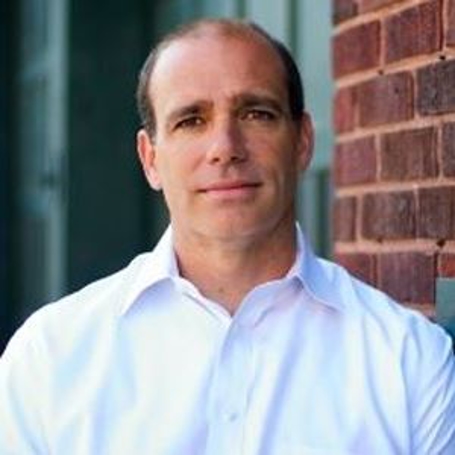
Michael Haight, Esq.
Founding Partner · Workers' Compensation Attorney · Haight Stang, LLC — Overland Park, KS
Michael Haight has practiced workers' compensation law in Kansas and Missouri since 1995 — limiting his practice almost exclusively to work injury claims for more than 30 years. Before founding Haight Stang, LLC, he spent seven years representing employers and insurance carriers, giving him direct knowledge of the tactics carriers use to minimize or deny claims. Since switching to claimant representation, he has concentrated his practice exclusively on injured workers across the Kansas City metro.
“Over the years, I have found the greatest challenge to injured workers to be the lack of honest information being given by the employer and its insurance carrier. Too many times, this causes good people to miss out on benefits they rightfully deserve. The greatest reward as an attorney is when a client feels the relief and gratitude that comes from knowledge and aggressive representation.”
- J.D., University of Kansas School of Law (1993)
- James P. Mize Trial Advocacy Award — KU Law
- American Jurisprudence Award in Advanced Litigation — KU Law
- Best of the Bar — Kansas City Business Journal (2015)
- AV® Rated by Martindale-Hubbell®
- Guest Instructor, Workers' Compensation — Baker University
- 30+ years workers' compensation practice, KS & MO
- 7 years defense-side experience — employers & carriers
- Bar Admissions: State of Kansas & State of Missouri
- Missouri Division of Workers' Compensation — Kansas City District
- Missouri Labor and Industrial Relations Commission (LIRC) — Appeals
- Kansas Division of Workers Compensation
- Jackson, Clay, Platte, Cass counties (MO) · Johnson, Wyandotte, Leavenworth counties (KS)

Michael Stang, Esq.
Founding Partner · Workers' Compensation Attorney · Haight Stang, LLC — Overland Park, KS
Michael Stang has practiced workers' compensation law in Kansas and Missouri for his entire legal career, beginning in 1998. Before law school, he worked as a stockbroker and small business owner — experience that directly shapes how he frames benefit calculations and settlement valuations for clients. His first three and a half years of legal practice were spent at one of the largest insurance defense firms in Kansas, handling workers' comp defense and learning firsthand how carriers build their cases against injured workers. Since 2001, he has represented injured workers exclusively.
“Whenever I am given the opportunity to speak to large groups, the one thing I try to impress on them is the idea that the first thing an injured worker does after having an accident can affect the entire course of the claim. I try to help people avoid the pitfalls that could destroy an otherwise compensable claim. One wrong move is all it takes. Knowledge is power.”
- J.D., University of Kansas School of Law (1998)
- B.A., Benedictine College
- AV® Rated by Martindale-Hubbell®
- Co-Chair, Workers' Compensation Section — Kansas City Metropolitan Bar Association (2 years)
- 25+ years workers' compensation practice, KS & MO
- 3.5 years defense-side experience — major Kansas insurance defense firm
- Bar Admissions: State of Kansas & State of Missouri
- Missouri Division of Workers' Compensation — Kansas City District
- Missouri Labor and Industrial Relations Commission (LIRC) — Appeals
- Kansas Division of Workers Compensation
- Jackson, Clay, Platte, Cass counties (MO) · Johnson, Wyandotte, Leavenworth counties (KS)
Talk to a Kansas City Workers’ Comp Attorney About Your Benefits
If a carrier has delayed or denied your treatment, disputed your disability rating, or handed you a light-duty offer that doesn’t reflect your actual restrictions, you have options. We serve injured workers throughout the Kansas City metro, including Jackson, Clay, Platte, and Cass counties in Missouri and Johnson, Wyandotte, and Leavenworth counties in Kansas, handling claims from initial filing through contested hearings and appeals before the LIRC.
Contact Haight Stang, LLC at (913) 815-1347 to discuss your workers’ comp benefits with an attorney who has seen these disputes from both sides of the table.
Our Satisfied Clients
-
"He worked on the case throughout the year; keeping me informed. He negotiated a reasonable settlement."
-
"I would recommend that anyone who is seeking representation with workman's comp to talk with this firm."Jill H.
-
"He helped me get the surgeries I needed and was a wonderful advocate."Jeanie A.